
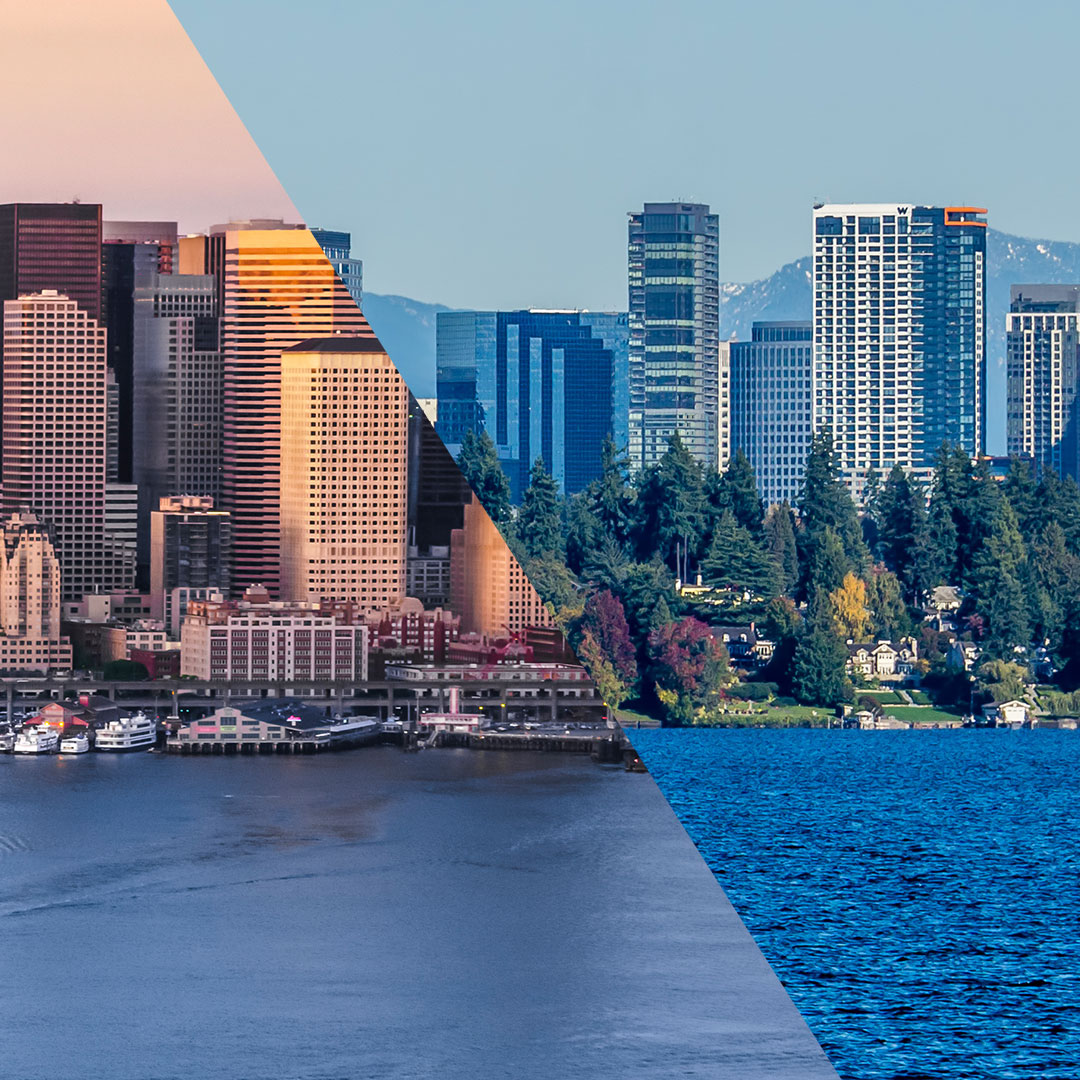
What We’re Seeing Across Seattle and the Eastside
For the past several years, headlines have painted a bleak picture of commercial real estate. Remote work, higher interest rates, and changing workplace expectations have fueled a narrative that office space is in permanent decline.
Recent stories about struggling office towers in downtown Seattle have only reinforced that perception.
At juniper Capital, we feel the reality is more nuanced. Across the Pacific Northwest, we’re seeing a market that isn’t disappearing, it’s evolving. Demand has become more selective as companies rethink where they work, how much space they need, and what they expect from it. For investors, developers, and lenders, understanding those shifts is more valuable than reacting to national headlines.
Commercial office isn’t one market moving in one direction.
Downtown Seattle continues to work through elevated vacancy as companies consolidate space and older office buildings compete for tenants. Some properties may ultimately require repositioning, adaptive reuse, or redevelopment to remain competitive.
Meanwhile, Bellevue and the Eastside continue to see healthier leasing activity, particularly in newer Class A buildings. Microsoft’s continued investment in Redmond, expanding AI companies, and a strong concentration of technology and professional services firms have helped sustain demand for modern, collaborative workspaces.
This isn’t simply a story of Seattle versus Bellevue. It’s a reflection of how businesses are redefining what makes office space valuable.
Companies are prioritizing flexibility, modern amenities, transit access, and workplaces that help attract top talent. As a result, newer buildings continue to outperform while many older assets face increasing pressure to adapt.
“The headlines often suggest commercial real estate is one market moving in one direction. What we see every day is much more nuanced. Strong projects are still getting financed because experienced investors continue to find opportunities where others only see uncertainty. That’s where private lending can make a real difference.”
— Kurt Ursich, President, Juniper Capital
AI Is Creating New Opportunities
Artificial intelligence is becoming one of the biggest drivers of commercial real estate investment.
As companies expand AI initiatives, demand is growing not only for collaborative office environments, but also for data centers, fiber infrastructure, industrial facilities, and advanced manufacturing. These investments are reshaping commercial development across Washington and creating opportunities well beyond the traditional office market.
We explored this trend further in our recent article, AI’s Growing Impact on Eastside Real Estate, examining how AI-driven investment is influencing regional development.
Opportunity Follows Change
Every real estate cycle creates both challenges and opportunities, and today’s market is no exception. While some office properties require reinvestment or repositioning, others continue to attract tenants because they’re aligned with how businesses operate today.
The investors who succeed in changing markets aren’t focused on the headline, they’re focused on the fundamentals. They’re asking where employers continue to invest, what types of properties businesses actually want, and which communities are positioned for long-term growth. Those are the questions that uncover opportunity, even during periods of market transition.
Looking Beyond the Headlines
Stories about vacant office towers are important because they highlight how dramatically the market has changed, but they don’t tell the whole story.
Commercial real estate has always evolved alongside the economy. Some properties will continue to face headwinds, while others are benefiting from technology investment, population growth, and changing workplace expectations.
At Juniper Capital, we believe every opportunity should be evaluated on its own merits. Thoughtful underwriting, local market knowledge, and creative financing remain essential in identifying projects positioned for long-term success.